


Why Your Thyroid and Sex Hormones Are Struggling in a World That Never Gets Dark

Most of us don’t think twice about the light we use at night. We finish work, turn on a few lamps, check our phones, and maybe watch something before bed. It feels harmless. But your body reads evening light very differently than you do.
If you’ve been dealing with low energy, slow metabolism, lighter sleep, or hormonal shifts that seem to appear out of nowhere, it might not be your diet or your genetics. It might simply be the lack of real darkness.
It sounds almost too simple, but that’s the point. Your hormones depend on darkness more than modern life allows.
The Body’s Natural Nighttime Plan
For most of human history, sunset meant the day was over. There was no debate. Light faded, the environment became dim, and the body automatically switched into its nighttime mode. That mode relies on melatonin.
Melatonin isn’t just for sleep. When it rises, several hormonal systems follow its lead, including the thyroid and reproductive hormones.
When you add bright light in the evening, the timing gets pushed back. The rise of melatonin gets smaller, later, or sometimes doesn’t rise enough at all. Over time, that affects the hormones that wait for that cue.
How Evening Light Affects the Thyroid
The thyroid listens for darkness. When melatonin rises at night, TSH, thyroid-stimulating hormone, rises with it. That’s part of how your body resets metabolism for the next day.
If you stay in bright light into the late evening, melatonin stays low. TSH doesn’t get the same signal. Eventually, that becomes noticeable.
Research reflects this. A study involving more than 81,000 pregnant women found that higher nighttime light exposure was linked with a higher chance of hypothyroidism. Another large U.S. study saw a long-term connection between light pollution and increased thyroid cancer risk.
The thyroid isn’t fragile; it just needs darkness to keep its timing steady.
Sex Hormones Depend on the Same Night Signal
Your reproductive hormones follow a daily rhythm, too.
Women
The ovaries have receptors for melatonin. They rely on that rise after sunset to help coordinate ovulation and progesterone production. When melatonin stays low because of artificial light, progesterone often doesn’t rise as strongly, and the cycle can feel less stable.
Studies on female night-shift workers show lower reproductive hormones and higher stress hormones. Many report irregular cycles or more pronounced PMS symptoms.
Animal research shows similar patterns: disrupted light schedules caused menstrual changes and reduced fertility, even when the animals' cycles looked normal on the surface.
Men
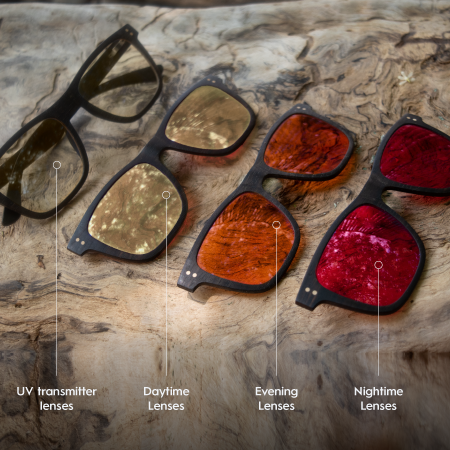
Testosterone peaks during deep sleep. But deep sleep depends heavily on melatonin. Wearing VivaRays Nighttime Lenses in the final hour before bed helps protect deep sleep by blocking melatonin-suppressing light, supporting natural testosterone rhythm.
When bright light blocks melatonin, sleep becomes lighter, and testosterone timing gets thrown off. Studies on night-shift workers show delayed and reduced testosterone production, which affects energy, motivation, and mood.
Again, the issue isn’t simply “stress” or “aging.” It’s the absence of darkness at the time the body expects it.
Why This Is More Common Today
Your body treats light as information. If your evening environment is bright, your brain registers it as daytime, even if it’s late. That one shift delays the entire hormonal process that should begin when the sun goes down.
The result often looks like:
-
lighter sleep
-
slow morning energy
-
irregular cycles
-
higher stress hormones
-
PMS that feels stronger than it used to
-
lower libido
-
slower metabolism
None of this happens instantly. It builds quietly, as evenings get brighter and nights get shorter, not by hours, but by the signals the body receives.
A Simple Way to Support Hormones With Light
You don’t need an extreme routine to help your hormones. You just need to give your body the signal it’s waiting for. If you can’t dim lights or step away from screens, Glo Evening Blue Light Blocking Glasses filter the melatonin-suppressing wavelengths that delay thyroid and reproductive hormone signaling, helping your body recognize that night has truly begun.
1. Reduce stimulating light after sunset
If you can’t dim lights or step away from screens, VivaRays Evening Lenses help filter the wavelengths that interfere the most with melatonin.
2. Choose softer lighting
Warm lamps, candles, or low-wattage lighting make it easier for your body to shift gears.
3. Strengthen the night signal before bed
Using VivaRays Nighttime Lenses in the last hour helps the body transition into a deeper nighttime mode.
4. Sleep in a dark space
Blackout curtains or a sleep mask help maintain the hormonal repair window.
5. Keep the bedroom simple
Fewer glowing devices make it easier for the body to settle into rest.
Your Body Still Knows What to Do
Hormones rely on timing, and timing relies on light. When the body doesn’t receive a clear “day is ending” message, the systems that depend on that cue begin to drift.
The good part? These systems respond quickly once the signals become consistent again.
A darker evening. A dark bedroom. A steady nighttime rhythm.
Your body recognizes this immediately, and your hormones follow.
So much valuable info.
It really shows what our body is naturally designed for.
Leave a comment