
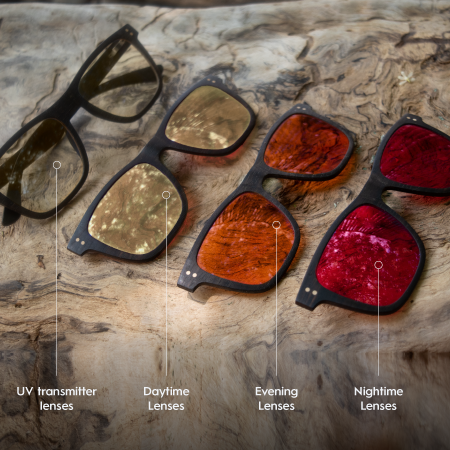


Red Light Glasses
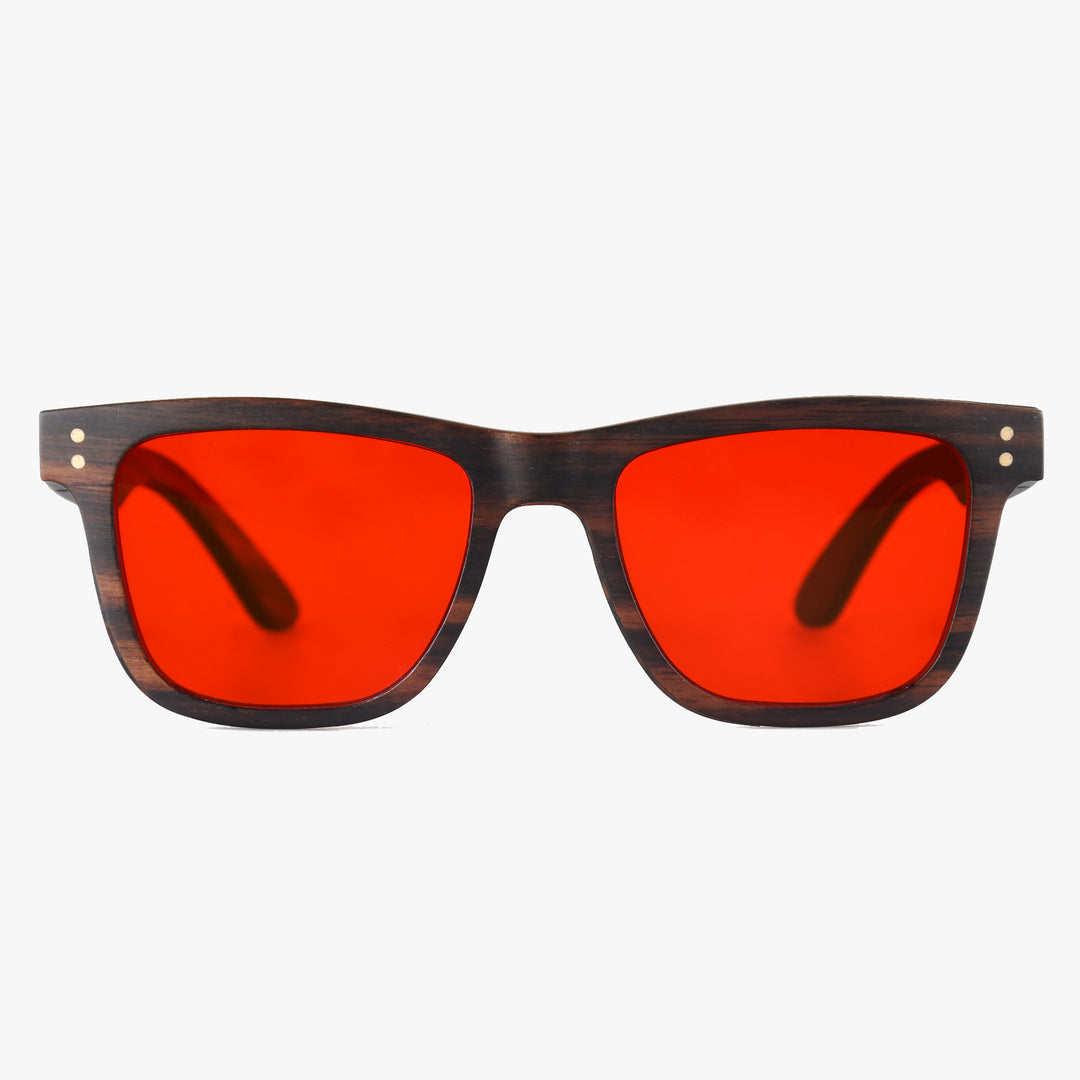

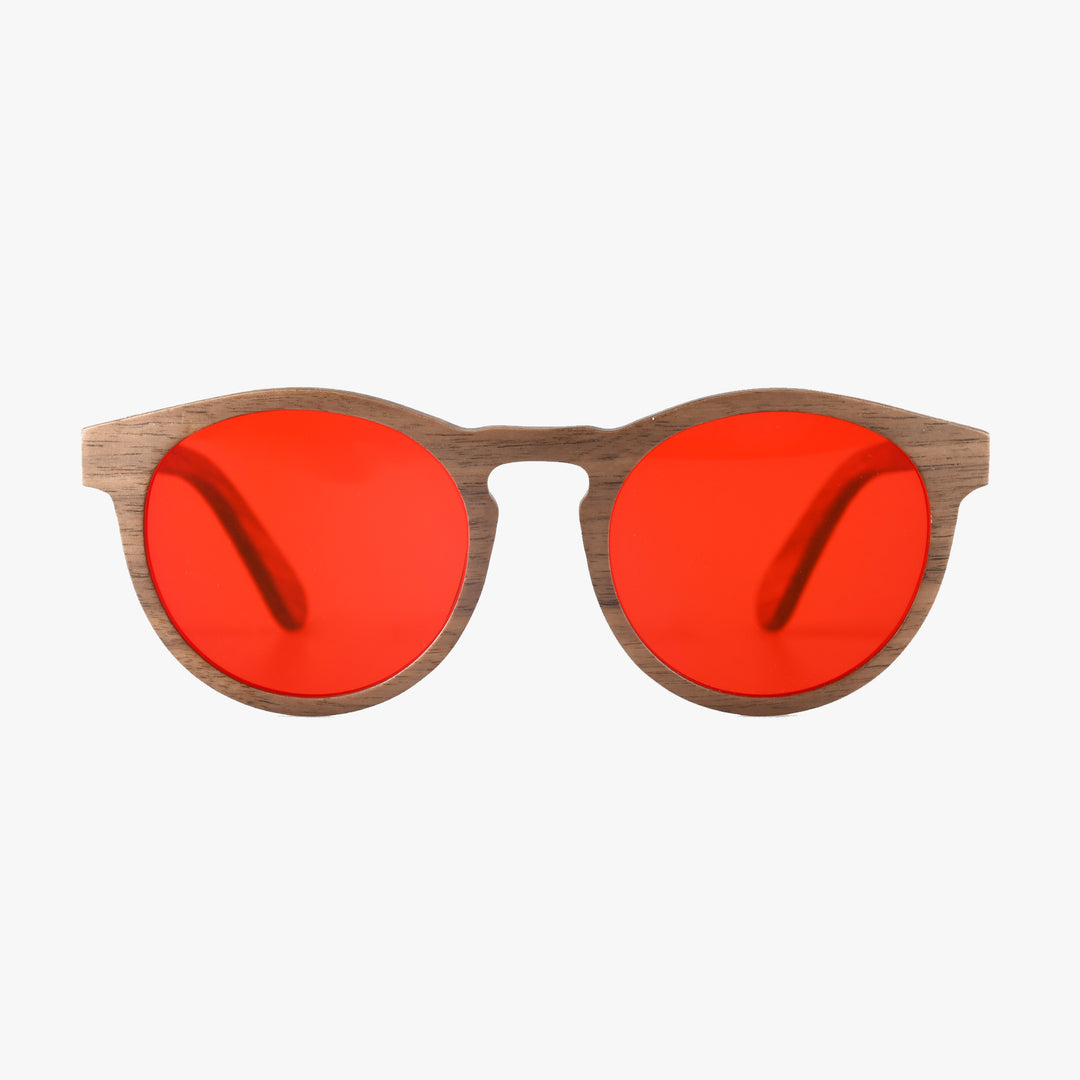

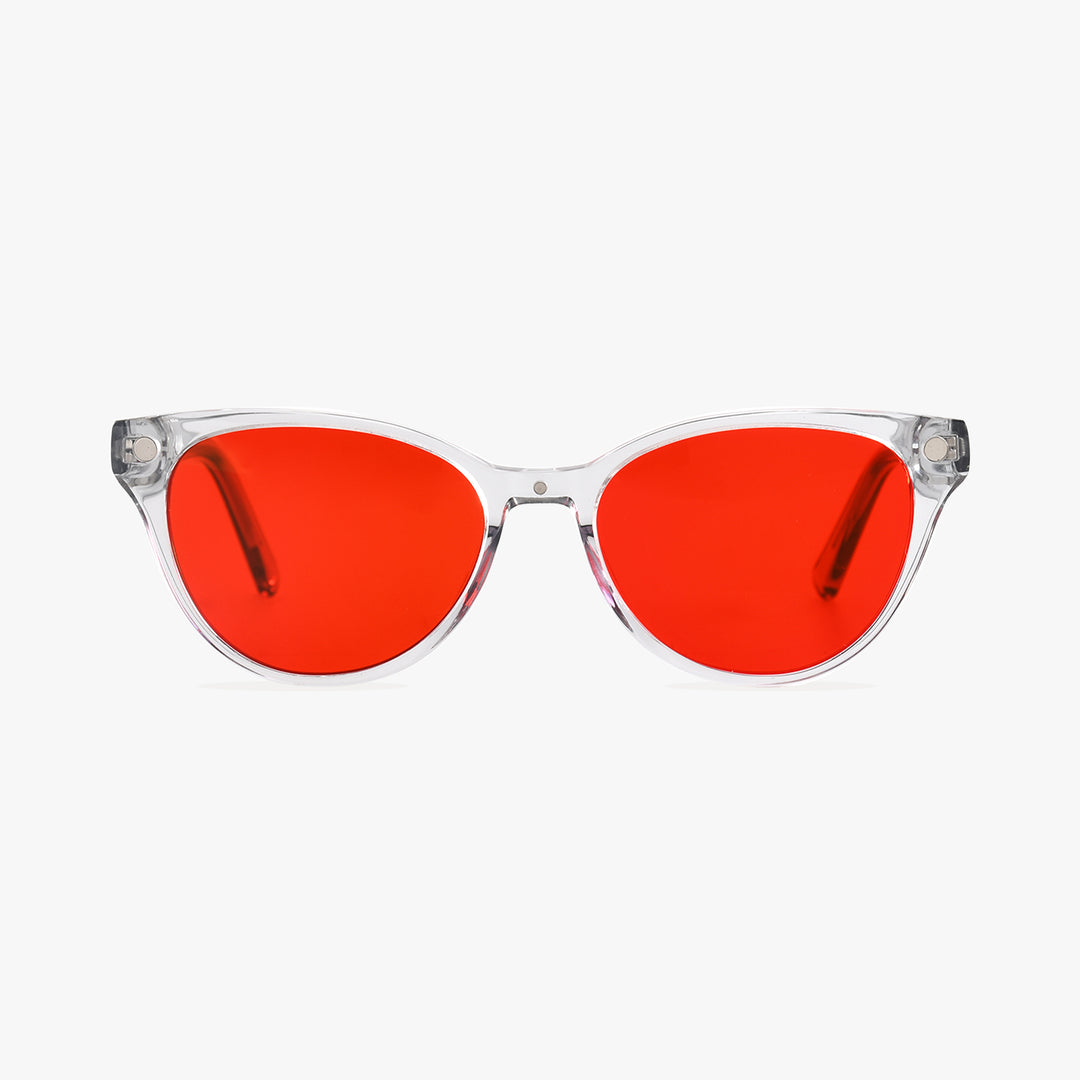
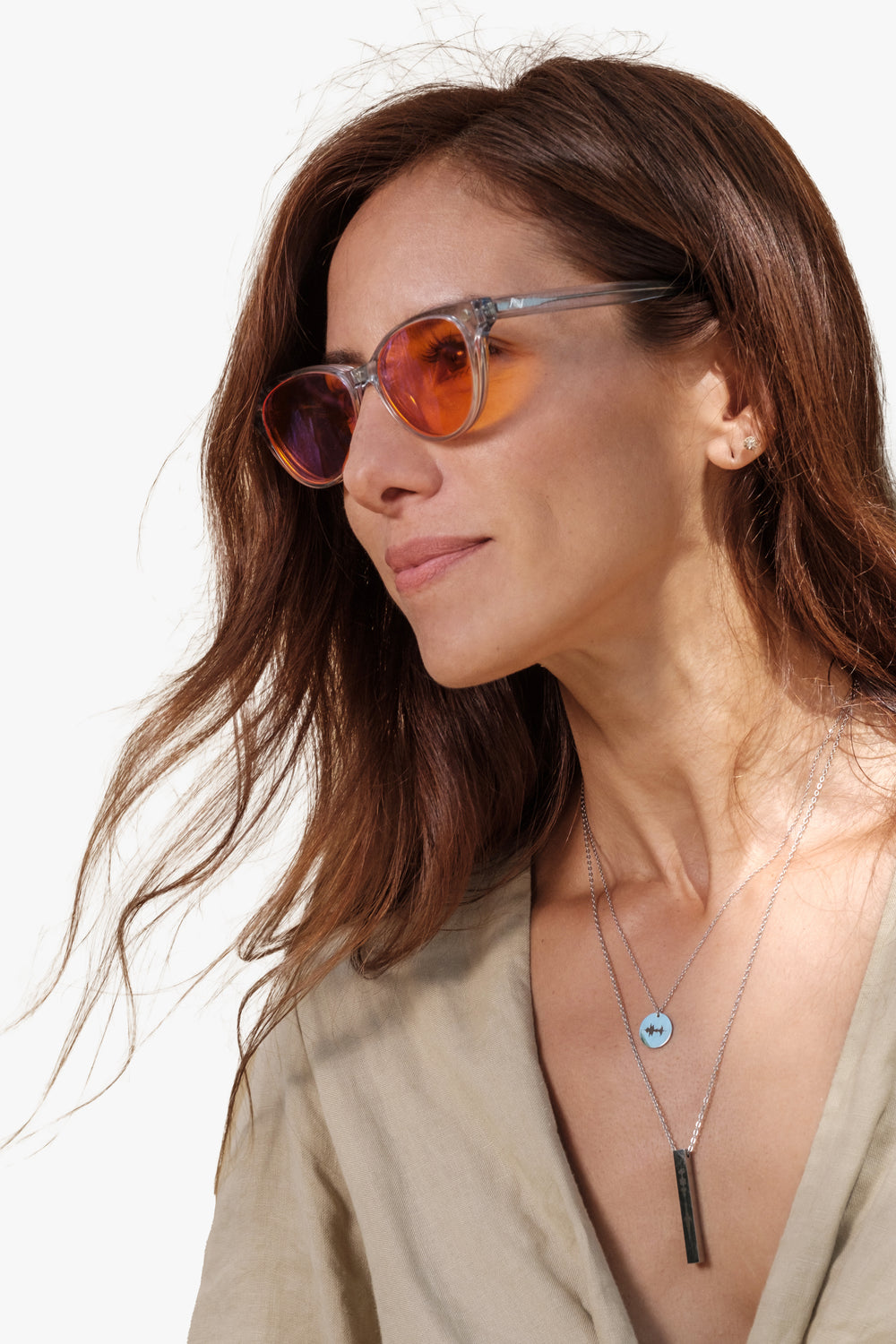


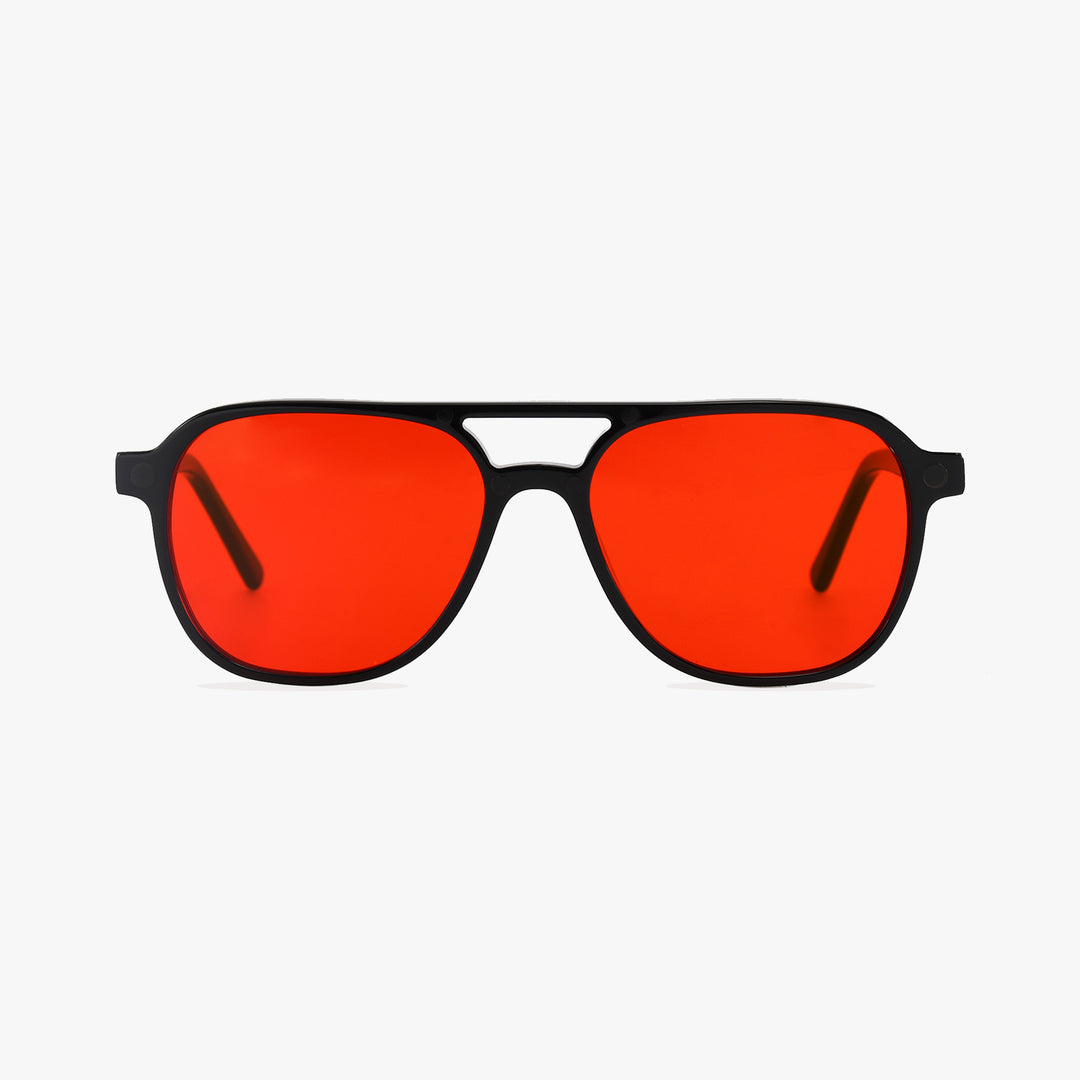





When the sun goes down, your body expects darkness. That darkness is what triggers your brain to release melatonin, the hormone responsible for helping you fall asleep, stay asleep, and recover overnight. But modern lighting, from overhead LEDs to phone screens, floods our eyes with blue and green wavelengths that mimic daytime light. The result? Your brain stays alert long after it should be resting.
VivaRays Red Light Glasses, also called Nighttime Red Lenses, are designed for use 1–2 hours before bedtime. These lenses block 100% of blue and green light (up to ~570 nm) and significantly reduce brightness to help your body wind down naturally. They’re like a sleeping pill without side effects. Once you put them on, you’ll notice a sense of calm, drowsiness, and readiness for sleep.
Unlike the orange lenses (used after sunset for reading and socializing), the red lenses are meant for your final evening phase, helping you transition smoothly into deep, restorative rest.
Why Nighttime Darkness Matters
Your circadian rhythm, the body’s internal clock, relies on light cues to know when it’s day or night. Blue and green wavelengths are especially powerful signals to the brain’s suprachiasmatic nucleus (SCN), which controls sleep-wake cycles. Even small amounts of artificial light at night can suppress melatonin by as much as 80%, delaying sleep onset and reducing sleep quality.
By wearing red light glasses one to two hours before bed, you simulate true nighttime darkness while still enjoying your evening routines. Studies show that people who reduce evening blue-green light exposure experience shorter sleep latency, deeper slow-wave sleep, and a more stable mood the next day. It’s a simple, natural way to support your body’s built-in recovery process.
Key Benefits of VivaRays Nighttime Red Lenses
1. Promotes Deep, Restorative Sleep
By completely filtering out the wavelengths that suppress melatonin, these lenses help your body transition smoothly into nighttime mode. Users often report falling asleep faster and waking up feeling more refreshed.
2. Recreates Natural Darkness Indoors
Under artificial lighting, your eyes stay in “daytime” mode. VivaRays’ red optics allow you to unwind, watch TV, or use digital devices without disturbing your hormonal signals. The environment feels calm and candle-lit, ideal for evening relaxation.
3. Enhances Circadian Alignment
Our red lenses are part of a complete circadian lens system, designed to guide you through each light phase of the day. When used alongside our daytime and evening lenses, they support a full 24-hour rhythm, boosting alertness in the morning and promoting rest at night.
4. Reduces Eye Strain and Light Sensitivity
Because red light scatters less inside the eye, it minimizes glare and tension from screens or bright LEDs. Many users notice reduced eye fatigue and improved comfort during late-night work or reading.
5. Supports Hormonal and Cognitive Health
Good sleep influences everything, from focus and mood to immune and metabolic balance. Protecting nighttime melatonin production helps regulate cortisol, insulin, and growth hormones, setting the stage for next-day performance.
Precision Engineering Meets Sustainable Design
Every pair of VivaRays red lenses is crafted with precision optical coatings to ensure accurate wavelength filtration, not the generic tinting found in many “blue blockers.” Frames are lightweight, durable, and made from sustainable materials that feel as good as they look.
Our collection includes:
- Standalone Red Lenses for pure nighttime use.
- Clip-On Systems that let you transform your prescription or regular glasses into nighttime protection.
- Full Circadian Lens Sets, offering day, evening, and red lenses for a complete bio-light solution.
All models undergo optical transmission testing to confirm they block the full spectrum of stimulating wavelengths while maintaining visual clarity.
How to Use Red Light Glasses Effectively
- Wear them 1–2 hours before bedtime. After your evening routine with the orange lenses, switch to red lenses to signal bedtime and help your body wind down naturally.
- Keep them on until the lights are off. Removing them early exposes your eyes to light again, resetting melatonin suppression.
- Pair with warm, low-light environments. Dim your lamps, switch to amber bulbs, and avoid overhead LEDs for maximum benefit.
- Combine with morning sunlight exposure. Bright, natural light early in the day reinforces your circadian rhythm, making nighttime darkness even more effective.
A Natural Way to Reset in a Modern World
Providing your body with optimal nighttime conditions is a powerful act of self-care. VivaRays Red Light Glasses allow you to live in modern comfort without compromising your biological rhythm. Instead of fighting against light pollution and digital overstimulation, you can restore balance.
Explore the VivaRays’ Glasses VivaRays’ Glasses and discover how intentional light management can transform your sleep, recovery, and overall well-being. Experience the science of circadian harmony, brought to life through optics designed to help you rest, recover, and reset in sync with nature.
Frequently Asked Questions
Red light glasses block 100% of blue and green light wavelengths that suppress melatonin production. They help your body naturally prepare for sleep by simulating true nighttime darkness, reducing eye strain, and promoting deep, restorative rest.
You should wear them 1–2 hours before bedtime. This helps signal your brain that it’s nighttime and allows your body to produce melatonin naturally for better sleep quality.
Yes, absolutely. Red light glasses are designed to let you enjoy your evening screen time without disturbing your sleep hormones. They reduce glare and prevent blue and green light exposure from screens and artificial lighting.
Orange lenses are ideal for evening use after sunset for reading or socializing, while red lenses are specifically designed for your final nighttime phase. Red lenses block more light wavelengths and prepare your body for deep sleep.
Yes, they are completely safe. They don’t alter your vision or strain your eyes. In fact, they reduce glare, prevent light sensitivity, and support your hormonal balance for better sleep and overall well-being.