


50 Things to Remove From Your Home: Non-Toxic Swaps

50 Things to Remove From Your Home (and What to Replace Them With)
Picture a kid growing up in a Hadza camp in northern Tanzania.
She sleeps on hides next to her mother.
No mattress chemicals seeping into her lungs at night.
She wakes up with the sun without alarms orscreens burning her retinas before her brain is even awake.
She drinks from springs and rivers. Not plastic bottles laced with microplastics.
Her food was hunted, gathered, or grown in soil that hasn't seen a sprayer in 10,000 years.
She doesn't have ADHD, eczema or anxiety.
Her sleep is deep and wakes up feeling rested and energized every day.
She runs around, dances, play, laugh, learns, observes...
Now look around your house.
Your overhead lights flood your eyes with blue daylight at 11pm.
Your microwave heats food in plastic that leaches into your bloodstream.
Your toothpaste contains a neurotoxin.
Your AirPods beam Bluetooth radiation into your skull.
Your laundry detergent coats your clothes in synthetic fragrance that you wear against your skin for 16 hours a day.
The Hadza didn't have to think about any of this. You do.
Here's the good news. Most of it is fixable. Some of it costs nothing. You just remove it. Some of it costs less than a meal out. Some of it takes a year and a paycheck to phase in.
And here's the most important thing: you don't need to do all of it. You need to start with one.
By the end of this guide, you'll have a complete map of the modern toxic load in your home, what to replace each item with, and a simple method to actually make the changes stick.
How to Use This List Without Overwhelming Yourself
Most people read a list like this, get inspired for an afternoon, try to fix everything in one weekend, and quit by Wednesday. The information becomes paralyzing instead of empowering. Sound familiar?
Here's a better way.
Pick Your Starting Tier
Most of the 50 items below fall into one of four cost tiers. Start where it makes sense for your life right now.
Tier 1: Free (just remove)
Sunglasses outside, TV in bedroom, phone-first-thing-in-the-morning, AirPods, smart watch overnight, microwave use. Cost: $0. Impact: high.
Tier 2: Under $30
Himalayan salt lamp with 15-watt bulb, natural deodorant, wool dryer balls, glass food containers, beeswax candles, white vinegar for cleaning.
Tier 3: Under $100
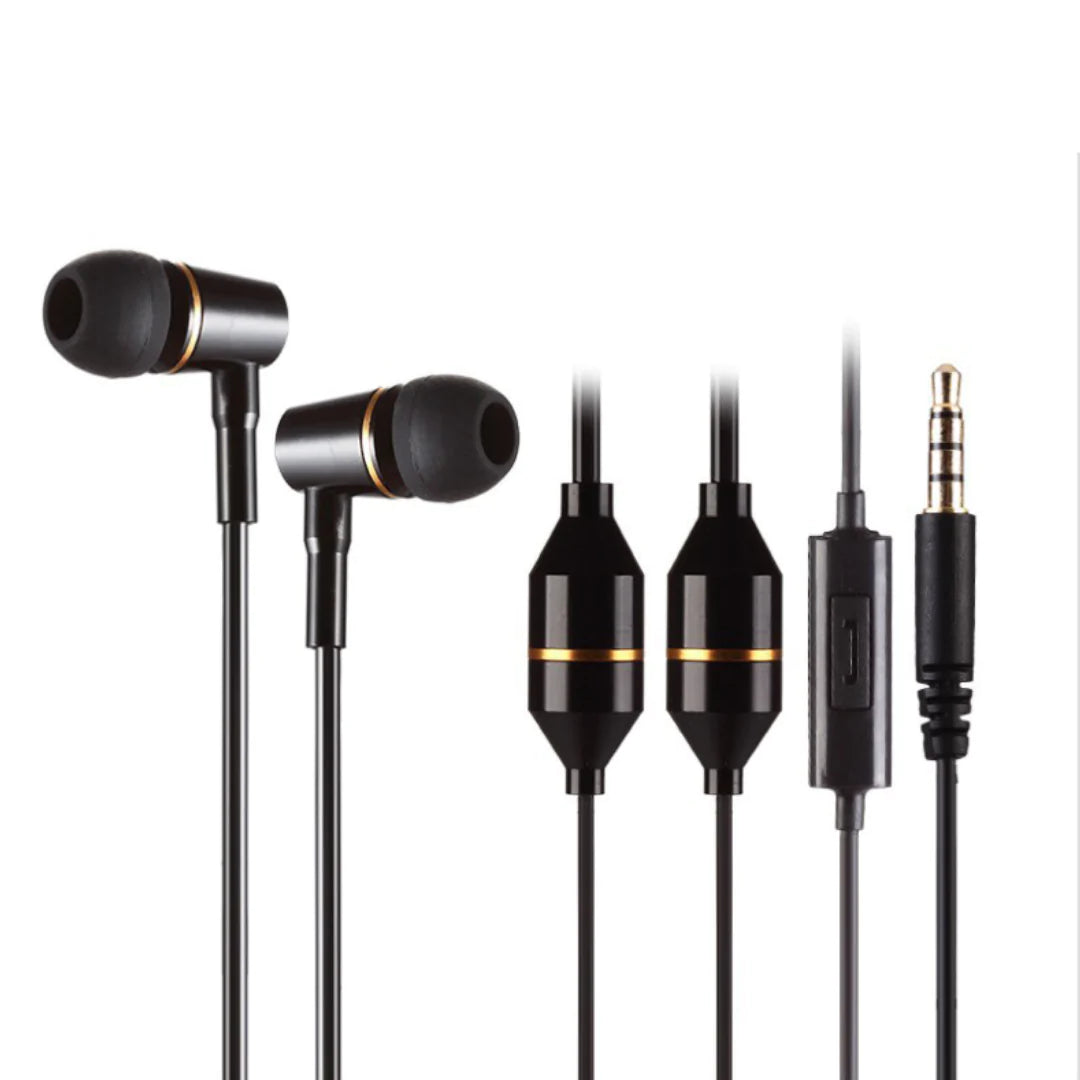
VivaRays circadian glasses, incandescent or halogen bulbs throughout the house, hydroxyapatite toothpaste, cast iron pan, wood cutting board, EMF-free air tube earphones.
Tier 4: Bigger investment
Reverse osmosis water filtration with remineralization, organic latex mattress, full cookware swap, organic cotton bedding, EMF mitigation for the whole home.
Pick one item from Tier 1 today. Add the next one when it feels easy. That's the protocol.
Now here's the full list, organized by category.
Lighting (4 swaps)
Light is the single most important environmental signal your body receives.
Your hormones, your sleep, your weight, your mood, your skin all read the light hitting your eyes and skin and adjust accordingly.
Yet the average modern home is lit with bulbs that look nothing like the sun your body was designed for. This is the highest-leverage category in the entire list.
1. LED lights
LED bulbs emit a heavy spike of blue and green wavelengths your brain reads as midday sun, no matter what time of day you flip the switch.
After sunset, this signal blocks melatonin your sleep hormone, suppresses leptin (your fullness hormone), and tells every cell in your body that it's still daytime.
The result is poor sleep, late-night cravings, and a quietly broken circadian rhythm.
Halogens give a slightly cooler, sun-like color and run hotter for similar lumens.
In bedrooms and evening spaces after sunset, switch to a Himalayan salt lamp with a 15-watt incandescent bulb.
The salt lamp emits a warm amber glow your eyes register as firelight, not daylight.
2. Fluorescent overhead lights
Fluorescent tubes flicker at frequencies your conscious mind can't see but your nervous system feels all day long. They emit blue-spiked light, and produce an electromagnetic field around them.
Hours of exposure correlate with headaches, eye strain, and disrupted mood.
Office workers know this even if they can't name it.
3. Daylight bulbs in the bedroom
"Daylight" bulbs (the bluish-white kind labeled 5000K or 6500K) are the worst possible choice for a bedroom. They are engineered to mimic noon sunlight. Your pineal gland reads the signal and shuts down melatonin production.
One salt lamp on the nightstand is enough for a bedroom. Add a second across the room for general ambient light.
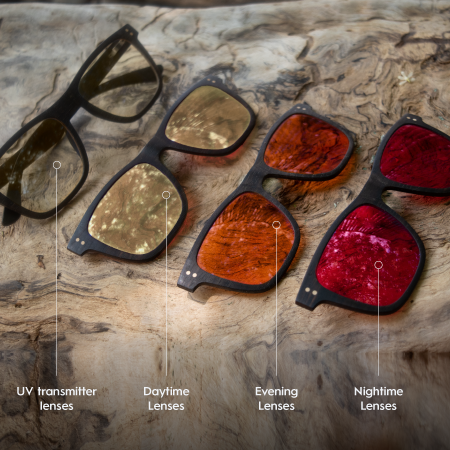
4. Sunglasses outside
Your eyes need direct sunlight to set your circadian rhythm.
They have photoreceptors connected directly to your hypothalamus that read the spectrum and intensity of the light and tell your hormones what time of day it is.
Sunglasses block that signal. People who wear them outside chronically often struggle with sleep, mood, and even sunburns, because their skin never gets the melanocyte-stimulating signal from their eyes that triggers melanin production.
You need good light(sun) when you are outside and you need to filter bad light (coming from LED bulbs and screens when you are inside).
For indoor artificial light (offices, screens, evening spaces), wear circadian glasses that filter blue and green wavelengths so your circadian rhythm and hormones stay aligned. VivaRays 3-in 1 lenses are designed for exactly this.

Kitchen and Cookware (8 swaps)
The kitchen is where most people unknowingly absorb the heaviest daily dose of synthetic chemicals, plastics, and heavy metals. Not because they eat poorly. Because the surfaces touching their food are leaching into it every time the heat goes on.
5. Microwaves
Microwaves heat by vibrating water molecules at 2.45 GHz, which denatures the proteins and degrades the nutrient structure of the food.
They also leak measurable electromagnetic radiation from the seal, even on newer models.
Then there's the bigger problem most people never think about: nearly every container used to reheat food in a microwave is plastic, and plastic plus heat equals leaching.
6. Plastic kitchenware
Spatulas, ladles, mixing bowls, measuring cups. Every time a plastic utensil touches a hot pan or sits in acidic food (tomato sauce, lemon juice, vinegar), it sheds microplastics and plasticizers like BPA, BPS, and phthalates into your meal.
These compounds act as endocrine disruptors, mimicking estrogen and interfering with thyroid function.
7. Plastic cutting boards
A 2022 study from North Dakota State University found that a single chopping session on a plastic cutting board can release tens of millions of microplastic particles into the food being cut.
That's a meaningful chunk of the microplastics now being detected in human blood, placentas, and brain tissue.
Wood has natural antimicrobial properties.
Oil it monthly with food-grade mineral oil or beeswax to keep it from cracking.
Avoid bamboo glued with formaldehyde resin. Look for boards labeled "edge grain" or "end grain."
8. Non-stick cookware
Teflon and other PFAS-coated pans release toxic fumes when heated above 500 degrees Fahrenheit, killing pet birds in nearby rooms (this is a documented warning on the box).
PFAS are called forever chemicals because they don't break down in the body. They accumulate in your blood, your organs, and your children's blood through breast milk. Some have been linked to thyroid disease, kidney cancer, and infertility.
Avoid anything labeled "ceramic non-stick" unless you can confirm zero PFAS in the coating, since marketing claims are often misleading.
9. Aluminum foil
Aluminum leaches into food when it makes contact with acidic or salty ingredients, especially at high heat.
Chronic aluminum exposure is associated with neurological issues and accumulates in brain tissue.
Yet most people bake fish in foil, grill vegetables in foil, and reheat in foil without thinking about it.
10. Plastic food storage containers
Even BPA-free plastic still leaches other endocrine disruptors.
Heat, fat, acid, and time all accelerate the leaching.
The takeout container you reused for chili last Tuesday delivered a hormone-disrupting dose with every bite.
11. Plastic coffee pods
Single-serve coffee pods (Keurig, Nespresso, store brands) involve hot water passing through plastic and aluminum, extracting both the coffee and a measurable amount of plasticizers and metals. Then the pod goes to a landfill, where it sits for centuries. Worst by every measure: health, environment, and taste.
12. Plastic ice cube trays
Same story as plastic kitchenware. Freezing slows the leaching but doesn't stop it. Every cube carries a small dose of plasticizers into the drink it cools.
Water (3 swaps)
You drink between two and three liters of water a day. Whatever is in it ends up in you.
This category often gets dismissed because tap water "looks fine." It isn't fine. Municipal water supplies routinely contain fluoride, chlorine, chloramine, heavy metals, pharmaceuticals, pesticide residues, and PFAS.
The 2023 USGS national tap water survey found PFAS in at least 45% of the U.S. tap water tested.
13. Tap water
Even when the water looks clean, the contaminants are invisible. Chlorine and chloramine kill the bacteria in the pipes (which is good) and also damage the bacteria in your gut (which is not).
Fluoride accumulates in the pineal gland and has been linked to lower IQ in children.
Pharmaceuticals like antidepressants and birth control pass through municipal treatment plants and into your glass.
Reverse osmosis removes the contaminants. Remineralization adds back the magnesium, calcium, and potassium your body needs (RO alone produces water that's slightly too pure).
Structuring (vortex, magnetic, or living-water systems) restores the natural molecular order that pipes and pumps destroy.
A countertop or under-sink unit costs $200 to $500 and lasts years.
14. Plastic water bottles
The bottled water industry is in many ways worse than tap.
A 2024 Columbia University study found an average of 240,000 plastic particles per liter of bottled water, including nanoplastics small enough to cross the blood-brain barrier.
The water also sits in plastic for weeks or months in trucks and warehouses, often in heat.
Every degree of warmth accelerates the leaching.
15. Fluoridated drinking water
Fluoride is a known neurotoxin. Multiple peer-reviewed studies (Bashash 2017, Green 2019, and the 2024 NTP review) have associated higher fluoride exposure during pregnancy and childhood with measurably lower IQ.
It also calcifies the pineal gland, which is what your body uses to produce melatonin. Yet most municipal water in North America is still fluoridated.
Sleep Environment (5 swaps)
You spend a third of your life in your bedroom. Whatever is in that room is touching your most vulnerable hours, when your body is detoxifying, repairing, and consolidating memories.
A clean bedroom is non-negotiable if you want to feel good in the daytime.
16. TV in the bedroom
The TV is the worst piece of furniture you can put in a bedroom.
The screen emits the exact spectrum of light your brain interprets as midday.
The content stimulates your nervous system at the hour it should be winding down.
The device emits low-level EMF all night long, even when off.
Couples who remove the TV from the bedroom report better sleep, better sex, and better conversations within two weeks.
17. Phone in the bedroom
Your phone is a beacon. It pings cell towers, connects to Wi-Fi, syncs with Bluetooth devices, and transmits radiation continuously.
Even on silent, even with the screen down, it is sending and receiving signals all night long.
Sleeping with it on the nightstand puts that broadcast about 18 inches from your head.
If for some reason the phone has to stay in the room, put it on airplane mode and leave it across the room, never on the bed or nightstand. Better yet, shut it completely off.
18. Wi-Fi router running at night
The router beams microwave radiation throughout your home at the 2.4 and 5 GHz frequencies, 24 hours a day.
Your body is most vulnerable to this exposure when you're sleeping, because your blood-brain barrier becomes more permeable and your repair systems are working at full capacity.
Newer studies (REFLEX, BioInitiative) link chronic Wi-Fi exposure to disrupted sleep, oxidative stress, and reduced fertility.
Even better, hardwire your home with ethernet cables and turn off the router's wireless broadcast entirely. T
he internet is faster, the signal is more stable, and your sleep improves.
19. Memory foam mattress
Memory foam is made from polyurethane treated with flame retardants (PBDEs, brominated compounds) and other VOCs that off-gas continuously, especially for the first six months.
You inhale these chemicals all night long with your face inches from the surface. PBDEs accumulate in fat tissue and have been linked to thyroid disruption and developmental issues in children.
Wool is naturally flame-resistant so it passes safety codes without chemical treatment.
Brands like Avocado, Naturepedic, and My Green Mattress offer certified options.
20. Smart watch worn overnight
Wearable devices emit Bluetooth radiation continuously, day and night, directly against your skin.
Sleep tracking is the most common excuse for wearing one to bed.
The irony is that the device itself disrupts the sleep it's measuring.
Your wrist contains major arteries and lymph nodes, and these tissues are absorbing the signal hour after hour.
EMF and Tech (4 swaps)
Electromagnetic fields from wireless devices are invisible, which makes them easy to dismiss. They are also one of the most rapidly increasing environmental exposures in human history.
In 1995, the average person was hit with almost no man-made microwave radiation. Today they're soaking in it 24 hours a day. Your body has not had time to adapt.
21. AirPods and Bluetooth earbuds
AirPods sit inside your ear canal, beaming Bluetooth radiation directly through your skull into your brain.
The ear canal is one of the most permeable parts of the head. The signal pulses constantly to stay connected to your phone. Independent measurements (Magda Havas, Olle Johansson) show non-thermal biological effects at exposure levels far below the wireless industry's safety standards.
22. Bluetooth keyboard and mouse
Same principle as AirPods, just farther from your head.
A Bluetooth keyboard sits inches from your hands all day, broadcasting continuously. Multiply that by a Bluetooth mouse, a Bluetooth headset, a Bluetooth speaker, and a Bluetooth printer, and your workstation becomes a continuous radiation field.
23. Cell phone in your pocket
Your phone in a pocket sits directly against your reproductive organs (in men) or your kidneys, ovaries, and lower spine (in women).
The signal is transmitting constantly to maintain the connection with cell towers and any paired wireless devices.
The fine print in every phone's safety manual recommends keeping the phone at least 5 to 15 millimeters from the body. Almost no one reads it.
24. Smart meter on your house
Smart meters broadcast your home's electricity usage to the utility company in microwave pulses, often hundreds or thousands of times per day.
The meter is usually mounted on an exterior wall, sometimes directly outside a bedroom or kitchen. You're being pulsed all day and all night, and you didn't sign up for it.
Personal Care (8 swaps)
What you put on your skin enters your bloodstream within minutes. The skin is your largest organ and one of the most absorbent. Yet the personal care industry is one of the least regulated in the country. The EU has banned over 1,300 chemicals from cosmetics. The U.S. has banned 11. That gap shows up in your bathroom cabinet.
25. Fluoride toothpaste
Fluoride doesn't need to be swallowed to be absorbed. The mucous membranes inside your mouth take it directly into your bloodstream within seconds. Add the same neurotoxicity concerns as fluoridated water, plus the fact that conventional toothpaste also typically contains SLS (a foaming detergent that strips your enamel), triclosan, and artificial sweeteners.
Look for: Hydroxyapatite (the active ingredient that actually rebuilds enamel), xylitol (natural cavity prevention), baking soda, sea minerals, essential oils. Hydroxyapatite is the form of calcium your teeth are literally made of. It outperforms fluoride for remineralization in multiple recent trials.
26. Aluminum antiperspirant
Antiperspirants work by blocking your sweat glands with aluminum compounds. The aluminum is absorbed through the thin skin of the underarm, very close to lymph nodes and breast tissue. The body needs to sweat. Sweat is how you eliminate heat, hormones, and toxins. Blocking it traps everything inside.
Look for: Magnesium-based natural deodorants, baking soda formulations (test for skin sensitivity), tallow-based deodorants, or simple coconut oil with essential oils. Note: a deodorant lets you sweat but neutralizes odor. An antiperspirant blocks sweating. You want the first, not the second.
27. Conventional shampoo
The shampoo industry runs on cheap synthetic detergents that strip the natural oils from your scalp and disrupt the skin barrier. Then the conditioner industry sells you the oils back. The fragrance alone, often listed simply as "fragrance" or "parfum," can contain dozens of undisclosed chemicals, many of them endocrine disruptors.
Look for: Plant-based surfactants (decyl glucoside, coco-glucoside, sodium coco-sulfate), cold-pressed plant oils (argan, jojoba, coconut), aloe vera, essential oils for fragrance, certified organic ingredients.
28. Conventional body wash
Same chemistry as shampoo, applied to a much larger surface area. Most body washes are detergent slurries dressed up with fragrance. Skin is your largest organ and your most absorbent surface. Whatever you wash with ends up in your bloodstream within minutes.
Look for: Saponified plant oils (olive, coconut, jojoba, hemp), castile soap base, essential oils, organic plant extracts. Dr. Bronner's pure castile soap is the simplest option. A bottle lasts months and works as body wash, hand soap, shampoo, and household cleaner.
29. Synthetic perfume and cologne
"Fragrance" on a label is the dirtiest word in the personal care industry. It's a legal loophole. Companies don't have to disclose what's inside it, and a single fragrance can contain 50 to 200 individual synthetic chemicals, including phthalates that disrupt hormones and benzene compounds linked to cancer. You spray these directly on your skin and wear them all day.
Look for: Pure essential oil blends, perfume oils with 100% disclosed natural ingredients, organic alcohol bases. Brands that list every component on the label are doing it right. Brands that just say "natural fragrance" without specifics are not.
30. Chemical sunscreen
Chemical sunscreens absorb into the skin and the bloodstream within hours. The FDA's own 2019 and 2020 studies confirmed that oxybenzone, octinoxate, octocrylene, homosalate, and avobenzone all exceed safety thresholds in human blood after a single application. Several of these compounds are also linked to coral reef death and have been banned in Hawaii and other regions. Plus, blocking UVB doesn't just prevent burning. It also blocks vitamin D synthesis and the production of melanocyte-stimulating hormone in your skin.
Look for: Non-nano zinc oxide (10 to 25 percent concentration) as the only active ingredient. Mineral-only sunscreens sit on top of the skin and physically reflect UV rather than absorbing it. Better still, build a solar callus through gradual daily exposure starting in early spring, so you need sunscreen only at peak hours.
31. Conventional makeup
The face is one of the thinnest, most absorbent surfaces of your body. Lipstick, in particular, ends up swallowed bit by bit through the day. The average woman applies roughly 12 products a day, each with 10 to 30 ingredients. That's hundreds of synthetic compounds going into and onto the body before lunch.
Look for: Mineral pigments (iron oxides, mica), cold-pressed plant oils (jojoba, argan, rosehip), vitamin E, organic plant extracts, clean-certified formulations (EWG Verified, MADE SAFE). Read the full ingredient list, not the marketing claim on the front.
32. Conventional nail polish
Traditional nail polish is one of the most toxic cosmetic categories that exists. The fumes alone, smelled in a single salon visit, contain known carcinogens and reproductive toxins. The polish then sits against your nail bed and absorbs through into your bloodstream over the days you wear it.
Look for: Polishes labeled "10-free," "13-free," or "16-free" (the higher the number, the more toxins are excluded). Water-based formulas with no solvents are the cleanest. If you get gel manicures, you're also dealing with the UV lamp, which damages skin. Skip those entirely.
Cleaning and Household (6 swaps)
The "fresh laundry smell." The "clean kitchen scent." The "ocean breeze" mist. These products are sold on the promise of cleanliness, but most of them are doing the opposite of clean. They're coating every surface in your home with synthetic chemicals you then breathe, touch, and eat all day.
33. Toxic cleaning sprays
Conventional kitchen and bathroom sprays contain quaternary ammonium compounds, bleach, and synthetic fragrance. Indoor air pollution from cleaning products is now considered worse than outdoor air pollution in most homes. People who clean professionally develop asthma at higher rates than the general population for exactly this reason.
Look for: White vinegar plus water (1:1 ratio in a spray bottle handles 90 percent of cleaning), baking soda for scrubbing, castile soap diluted in water, hydrogen peroxide for disinfecting. Add essential oils (tea tree, lemon, lavender) for scent and extra antimicrobial action. This whole cleaning kit costs about $15.
34. Air fresheners and plug-ins
Air fresheners are not cleaning the air. They're adding chemicals to it. A single plug-in releases volatile organic compounds (VOCs) continuously into the room. Studies have linked frequent use to asthma, headaches, hormone disruption, and reduced lung function. The "smell of clean" is the smell of inhalation toxicity.
35. Dryer sheets
Dryer sheets coat your clothes (and your dryer) in a synthetic fragrance and quaternary ammonium film designed to "soften." That film then sits against your skin for 16 hours a day. The fragrance is among the most aggressive in any household product because it has to survive the heat of the dryer.
36. Conventional laundry detergent
This is the single biggest source of synthetic fragrance exposure in most homes. The detergent permeates every fabric in your house: bedding, towels, underwear, shirts. Then those fabrics sit against your skin all day. Your laundry detergent is in your bloodstream within hours of getting dressed.
Look for: Plant-based surfactants (coco-glucoside, decyl glucoside), enzymes for stain removal (protease, lipase), fragrance-free formulations, or essential-oil-only scents. EWG Verified and MADE SAFE certifications screen out the worst offenders. Brands like Branch Basics, Molly's Suds, Dropps, and Truly Free meet this standard.
37. Paraffin candles
Paraffin is a byproduct of petroleum refining. Burning a paraffin candle releases benzene, toluene, and other carcinogens into the air of your home. The "fragrance" used to scent them adds another layer of synthetic toxicity. A scented paraffin candle is one of the dirtiest air sources you can voluntarily set on fire.
38. Artificial fragrances anywhere
Once you start removing fragrance from your home, you realize how much of it was there. Shampoo, conditioner, body wash, laundry detergent, fabric softener, cleaning sprays, candles, air fresheners, hand soap, dish soap, body lotion. Each one adds its own load. Together they're a 24-hour chemical bath.
Clothing and Textiles (4 swaps)
You wear fabric against your skin for 16 hours a day. You sleep on it for the other 8. The textile industry is the second-most polluting industry in the world after oil, and most of that pollution ends up in the fibers people are wearing.
39. Synthetic fabrics next to your skin
Polyester, nylon, acrylic, and rayon are essentially plastic fibers. They shed microplastics into your skin and the air every time you move. They don't breathe, so they trap heat and bacteria. And they're often treated with formaldehyde-based wrinkle-resisters, anti-microbials, and flame retardants that off-gas slowly throughout the garment's life.
40. New mattress without an off-gassing period
Even an organic mattress benefits from a few weeks of airing out before you sleep on it. Conventional mattresses absolutely require it. The first six months of a polyurethane mattress's life is when it releases the highest concentration of VOCs into your bedroom air, and into your lungs every night.
41. Polyester bed sheets
You spend 8 hours a night breathing into your sheets and sweating into them. Polyester traps the sweat, doesn't breathe, and slowly sheds microplastics into your nose and mouth all night. Plus the "wrinkle-free" finish on most polyester sheets uses formaldehyde-releasing resins.
42. Underwire bras worn 24/7
Tight bras with metal underwires compress lymph nodes in the chest area, restrict drainage, and can interfere with breast tissue circulation. The wire itself often contains nickel, which is a common skin sensitizer. The synthetic foam and elastic add to the chemical load. The constant compression is also linked in some studies to higher rates of breast tissue density issues.
Food and Intake (4 swaps)
This isn't a nutrition guide. There are thousands of those already. But four food-related swaps deserve a place on this list because they cut across every meal and every day.
43. Seed oils (canola, soybean, corn, sunflower, safflower)
Industrial seed oils are extracted with hexane (a petroleum solvent), bleached, deodorized, and then sold as "healthy." They are extremely high in omega-6 fatty acids, which when consumed in excess become a substrate for systemic inflammation. They oxidize easily at cooking temperatures, creating aldehydes and lipid peroxides that damage cells. They've been the foundation of the American diet for 70 years, and the timeline matches the rise of every chronic disease.
44. Non-organic Dirty Dozen produce
The Environmental Working Group publishes a yearly Dirty Dozen list of the produce with the highest pesticide residues. These items hold onto chemicals even after washing. For everything else, conventional is fine. For these, organic is worth the cost.
45. Plastic-wrapped foods being reheated
Every time you microwave food in its original plastic container or covered with plastic wrap, you're transferring measurable amounts of plasticizers into the food. Hot food plus plastic is one of the worst combinations for endocrine exposure.
46. Diet sodas with aspartame
Aspartame is one of the most heavily studied food additives in history, and the picture is not flattering. The 2023 WHO classification placed it as a "possible carcinogen." Beyond that, it disrupts the gut microbiome, alters glucose tolerance, and the methanol it breaks down into is a known neurotoxin. Sucralose and saccharin aren't much better.
Daytime Habits (4 swaps)
The final category isn't about objects. It's about behaviors. You can have a perfectly clean home and still get hit by the worst three signals your body can receive: looking at a screen before sunrise, eating after dark, and being lit by LEDs after sunset.
47. Looking at your phone first thing in the morning
The first light your eyes see in the morning sets your entire circadian rhythm for the day. If the first light is your phone, you've just told your hypothalamus that the sun is rising at 6500K out of a 5-inch rectangle inside a dark room. You've also dumped cortisol and dopamine before your nervous system has finished waking up. The result is a body that's anxious, hungry at the wrong times, and tired by 3pm.
48. Eating after sunset
Your digestive system runs on a circadian rhythm just like every other system. After sunset, insulin sensitivity drops, melatonin starts rising, and your body shifts toward repair and detoxification. Food eaten late forces the body to digest when it should be cleaning. Chronic late eating is linked to weight gain, insulin resistance, and poor sleep, independent of what you eat or how much.
49. Spending the whole day indoors
The average North American adult spends 93 percent of their life indoors. The light inside is roughly 100 to 500 lux. Outside on an overcast day, you're getting 10,000 to 25,000 lux. On a sunny day, 100,000 lux. Your hormones, mood, and immune system are calibrated to outdoor light intensity. Indoor-only living is a form of light starvation.
50. Artificial light after sunset without protection
Even if you've done everything else right, the moment the sun goes down and you turn on a screen or a ceiling light, you're hit with the same circadian disruption as the people who've done nothing at all. This is the final piece. The lights inside almost every house, restaurant, gym, and office after dark are sending your body a daytime signal at the exact wrong moment.

What to Do Next
You've now read 50 items. Your brain is probably feeling some version of overwhelmed.
Don't try to do 50. Do one.
Go back to the Tier 1 list. Pick the item that feels easiest to remove. Maybe it's the sunglasses you wear out the door every morning. Maybe it's the AirPods. Maybe it's the phone on the nightstand. Whichever one feels like the smallest hill to climb, that's your starting point.
Do it for some time. When it feels automatic, pick the next one.
In a year, you'll have done somewhere between 12 and 30 swaps without any week feeling hard. In two years, you'll have done most of the list.
Your home will feel different. You will feel different.
Frequently Asked Questions
Do I really need to replace all 50 things to feel a difference?
No. Most people notice meaningful changes in sleep, energy, and mood after the first 5 to 10 swaps, especially if those swaps come from the lighting and sleep environment categories. The first 80 percent of the benefit comes from the first 20 percent of the changes. Start where the impact is highest, not where the list begins.
What's the single highest-impact swap I can make today?
Three tie for first place: get morning sunlight in your eyes within 30 minutes of waking, get the TV and phone out of the bedroom, and switch to incandescent or halogen bulbs at home. All three target your circadian rhythm, which is upstream of almost every other system in the body. Pick whichever you can implement tonight.
Isn't this all just biohacking? Why does it actually matter?
It isn't biohacking. It's returning to a baseline humans lived with for 300,000 years. Modern indoor environments are the experiment, not the control. The chronic disease rates that came with industrialization (obesity, type 2 diabetes, depression, autoimmune conditions, infertility) all track the timeline of the items on this list. Removing them doesn't optimize you. It un-poisons you.
How do I get my partner or family on board without sounding crazy?
Don't try to convince them with science. Make one swap in your own routine. Let them watch you sleep better, wake up earlier, and stop snacking at 11pm. The change in you is more persuasive than any article. Most family conversions happen when one person starts feeling visibly better and the others get curious.
What if I rent and can't change the lighting or remove the smart meter?
You have more control than you think. Buy table lamps with incandescent bulbs and leave the overhead lights off. Use blackout curtains and a sleep mask to compensate for light pollution. Hardwire your own ethernet on a timer for the Wi-Fi. The smart meter is trickier, but EMF-blocking paint, fabric, or a small interior shield can reduce exposure on the wall it sits behind. Don't let perfect be the enemy of progress.
Can my kids handle these changes too?
Kids handle them better than adults. Their nervous systems are more adaptable, their habits aren't entrenched, and they often feel the difference faster. The biggest wins for kids: no screens in the bedroom, no AirPods or wireless earbuds, sunlight first thing in the morning, no fluoride, and clean cookware. Start with what affects them directly and the rest follows naturally.
Ready to start with the highest-impact swap on the list?
Circadian glasses are the single tool that protects you from artificial light after sunset, the source most modern people can't avoid.
Leave a comment