


The Hidden Connection Destroying Women's Health: Your Monthly Cycle & Light

The Quiet Struggle Many Women Don’t Talk About
“My cycle is all over the place.”
“I used to sleep well, now I can’t.”
“Every month feels unpredictable.”
You might have said one of these yourself.
And maybe you’ve wondered why your body feels out of rhythm, even when you eat right, exercise, and do everything “healthy.”
Here’s a truth most women never hear: your hormones aren’t the problem. The real issue may be the light you live in.
We’ve built lives surrounded by artificial brightness, long hours indoors, screens late into the night, mornings that start with phone glow instead of sunlight. And while it feels normal, your biology reads it differently.
To your body, the light around you is information. When that information comes at the wrong time, your hormonal rhythm gets scrambled.
You’re not broken. You’re simply living under the wrong light.
The Two Biological Clocks That Shape a Woman’s Health
You already know about the circadian rhythm, your 24-hour clock that tells you when to wake, sleep, and eat.
But women have another rhythm layered on top: the infradian rhythm.
It runs roughly 28 days and guides your menstrual cycle, fertility, and mood changes.
These two clocks aren’t separate. They move like gears; when one falls out of sync, the other soon follows.
Light is what keeps them talking to each other. Morning sunlight sets the tempo. Evening darkness helps the body reset. Without those cues, both clocks drift, and your body starts losing its sense of time.
Did You Know?
Getting just 20 minutes of sunlight in the morning can help regulate both your daily and monthly rhythms. It’s nature’s built-in hormone signal.
When Light Sends the Wrong Message
Picture a normal day.
You wake up under artificial lighting, spend your hours inside, and end the night scrolling through your phone. Nothing unusual, except your brain still thinks light equals daytime.
Every late-night Netflix glow or kitchen LED tells your cells, “stay awake.” And when your body thinks it’s daytime all the time, hormone production gets confused.
Science Snapshot
A 2023 review following nearly 200,000 women found that those exposed to irregular light schedules had:
-
30% more irregular periods
-
More painful cycles
-
Earlier menopause
That’s decades of research showing one clear pattern: when light cues break, so do hormonal rhythms.
How Morning Light Shapes Your Hormones
When sunlight hits your eyes early in the day, your body gets a gentle nudge: it’s time to wake up.
This signal tells your brain to make cortisol, your natural energy hormone, using pregnenolone, the “mother hormone.”
Under balanced conditions, the rest of that pregnenolone turns into estrogen and progesterone. That’s how nature designed your hormonal factory: a steady flow between stress and sex hormones.
But when light arrives at the wrong time, your body shifts gears. Artificial brightness late at night tells your mitochondria that you’re still under threat. So instead of making reproductive hormones, it diverts pregnenolone toward more cortisol.
Day after day, that means less support for your cycle, fertility, and skin, and more fatigue and anxiety.
Think of it like this: your body isn’t confused, it’s protecting you. It just doesn’t realize the “danger” is the lamp beside your bed.
When the Hormone Factory Stalls
Back in the mid-1900s, a German researcher named Fritz Hollwich discovered that exposure to artificial blue light spiked cortisol and ACTH, both stress hormones. He showed that the body reacts to light as if it’s emotional information.
Modern science has confirmed it: prolonged exposure to harsh, unbalanced lighting triggers stress pathways and drains reproductive energy.
For women, this can show up as:
-
Irregular or heavy periods
-
PMS that feels worse than before
-
Sudden mood swings or anxiety
-
Premature perimenopause symptoms
Estrogen and progesterone normally protect your metabolism; they regulate blood sugar, protect your liver, and help you maintain energy. But once the circadian rhythm breaks, that protection fades years earlier than expected.
You might start to feel older than you are, not because your body is failing, but because your internal timing is off.
Menopause and the Light Disconnect
Menopause isn’t supposed to feel like falling off a cliff. In a balanced body, it’s a graceful transition.
As the ovaries wind down, the adrenal glands quietly take over hormone production. But that only works when stress is low, and light plays a big role in that balance. Constant artificial brightness pushes cortisol high, overworking the adrenals. They can’t make enough estrogen and progesterone to smooth the transition.
A study tracking over 80,000 nurses for two decades found that women exposed to chronic circadian disruption entered menopause earlier, especially those under 45. The more years of disrupted sleep and light cycles, the sooner menopause arrives.
In other words, your body’s not in early decline; it’s adapting to an unnatural rhythm.
The Light Reset: How to Support Your Hormones Naturally
You don’t need to overhaul your life. Just small shifts in how you meet light each day can bring your hormones back into sync.
1. Morning Power Ritual
-
Step outside soon after waking.
-
Get 15–30 minutes of daylight: no sunglasses, no windows.
-
This morning light resets cortisol and serotonin, setting the tone for your day and your sleep that night.
2. Cycle Syncing
-
During your luteal phase (days 15–28), protect your evenings.
-
Your body needs darkness for progesterone production.
-
Use warm, amber lights under 3000K and avoid bright white LEDs.
3. Midlife Reset
-
If you’re in perimenopause or menopause, follow nature’s lead: sleep earlier, wake with the light.
-
Support your adrenal glands with quiet mornings, gentle routines instead of instant phone checks.
4. Evening Sanctuary
-
Dim the lights two hours before bed.
-
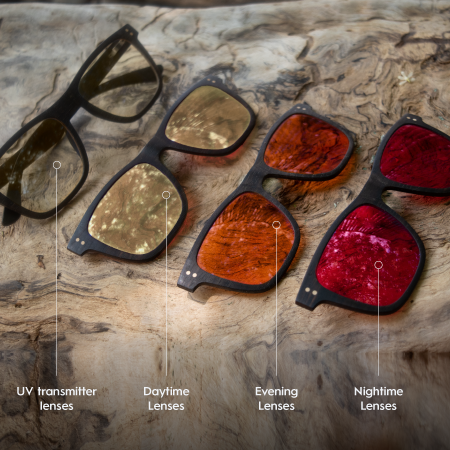
If you can’t avoid screens, wear VivaRays® 3-in-1 Light Optimization Glasses to block blue and green wavelengths. They help your body make melatonin naturally without forcing you into total darkness.
5. The Stress Shield
-
Pair good light habits with calming ones.
-
Deep breathing before bed.
-
Soft music.
-
A warm herbal tea ritual.
Each signal tells your body: it’s safe now. And safe bodies heal.
Quick Tip: Set your devices to “Night Shift” after sunset, and your hormones will thank you in the morning.
Light Matters at Every Stage
|
Life Stage |
Light Focus |
Benefit |
|
Reproductive Years |
Morning sunlight |
Stabilizes ovulation and mood |
|
Perimenopause |
Evening darkness |
Boosts progesterone and sleep |
|
Menopause |
Consistent rhythm |
Balances metabolism and energy |
Your body doesn’t need perfection, just rhythm. Give it the light cues it recognizes, and it will start remembering how to function with ease again.
You’re Not Broken, You’re Out of Rhythm
Your biology still knows what to do. It’s been following sunlight and darkness for millions of years.
You don’t have to fix yourself. You just have to remind your body what morning feels like and what night truly means.
Start small: open your curtains tomorrow at sunrise. Let natural light hit your eyes. That single act starts rewriting your body’s story.
Discover more about light and women’s health at VivaRays. Explore tools and guides that help you live in sync with the rhythm your body was designed for.
Leave a comment